














Content Table
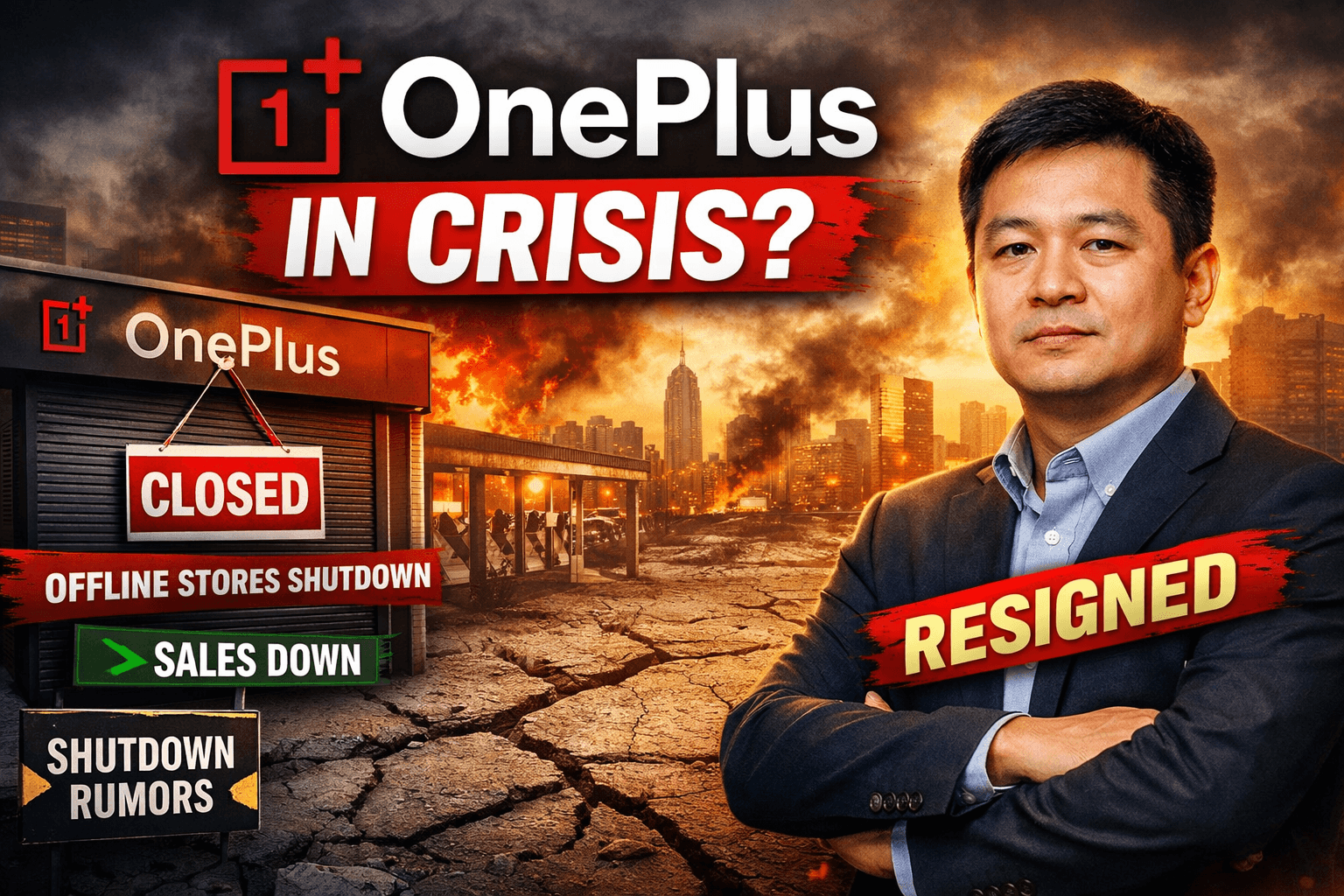
In recent weeks, OnePlus has found itself at the center of intense speculation in India. Reports of offline retail shutdowns, the sudden resignation of its India CEO, and declining market share have triggered widespread rumors about a possible exit or shutdown.
But how much of this is actually true? And what does it mean for consumers and the broader smartphone market? Here’s a clear, fact-based breakdown.
A Strategic Shift: OnePlus Moves Away from Offline Retail
One of the most significant developments is OnePlus’ decision to scale down its offline retail presence in India.
According to multiple reports, the company has instructed several partner-operated stores to shut operations by the end of March 2026, retaining only a limited number of official experience stores in major cities.
Why this move?
- Rising operational costs in offline retail
- Lower profitability compared to online channels
- A return to OnePlus’ original “online-first” strategy
This isn’t entirely surprising. When OnePlus entered India, it built its identity as an online-exclusive brand, leveraging platforms like Amazon to offer competitive pricing.
👉 The current move signals a return to its roots, rather than a complete withdrawal.
Leadership Shake-Up: CEO Exit Raises Questions
Adding to the uncertainty, Robin Liu, CEO of OnePlus India, stepped down in March 2026.
The company cited “pursuing personal passions” as the official reason. However, the timing has raised eyebrows due to:
- Ongoing restructuring efforts
- Declining sales performance
- Increasing integration with OPPO
In corporate transitions, leadership exits during restructuring phases often indicate internal strategic realignment, rather than isolated personal decisions.
Market Performance: Declining Share and Rising Competition
Over the past year, OnePlus has faced mounting pressure in India’s highly competitive smartphone market.
Key challenges:
- Significant drop in shipments (reported double-digit decline)
- Market share shrinking to low single digits
- Strong competition from brands like:
- iQOO
- Xiaomi
- Samsung
Once positioned as a “flagship killer”, OnePlus now finds itself squeezed between:
- Premium players (Apple, Samsung)
- Aggressive mid-range competitors
Deepening Integration with OPPO
Another critical factor shaping OnePlus’ future is its increasing reliance on OPPO, its sister brand under BBK Electronics.
What’s changing:
- Shared R&D and product platforms
- Expanded service network using OPPO infrastructure
- Operational consolidation to reduce costs
This integration has led to a growing perception that OnePlus is evolving into a sub-brand rather than an independent identity.
Shutdown Rumors: Fact vs Fiction
The biggest concern among consumers has been:
👉 “Is OnePlus shutting down in India?”
The reality:
- ❌ No official confirmation of shutdown
- ✅ Company has reiterated commitment to Indian operations
- ⚠️ However, downsizing and restructuring are clearly underway
In essence, OnePlus is not exiting—but it is transforming.
The New Strategy: Online-First, Cost-Efficient Model
Going forward, OnePlus appears to be focusing on:
- Direct-to-consumer (D2C) channels
- Online marketplaces
- Leaner operational structure
Strategic intent:
- Reduce overhead costs
- Improve pricing competitiveness
- Target digitally native consumers
This aligns with broader industry trends where online channels are increasingly dominant, especially in price-sensitive markets like India.
Retail Backlash and Industry Impact
The decision to exit offline retail hasn’t gone unnoticed. Several retail partners and associations have reportedly expressed dissatisfaction, citing:
- Loss of business
- Lack of transition support
- Potential legal concerns
This could create short-term friction, particularly in tier-2 and tier-3 markets where offline presence still plays a critical role.
Final Analysis: A Brand in Transition, Not in Decline
While headlines may suggest crisis, the reality is more nuanced.
What’s actually happening:
- OnePlus is not shutting down
- It is undergoing a major strategic reset
- The brand is shifting toward a leaner, digitally focused model
The bigger picture:
This is less about failure and more about adaptation to changing market dynamics.
What Lies Ahead for OnePlus in India?
The coming months will be crucial. Key indicators to watch include:
- Performance of upcoming launches (e.g., Nord series)
- Consumer response to online-only strategy
- Brand positioning amid OPPO integration
If executed well, OnePlus could:
👉 Re-establish itself as a strong online-first premium challenger
If not, it risks:
👉 Becoming just another sub-brand in a crowded market
Conclusion
OnePlus in 2026 is not disappearing—it is reinventing itself under pressure.
For consumers, the takeaway is simple:
👉 The brand will continue to operate, but its identity, strategy, and market presence are clearly evolving.